

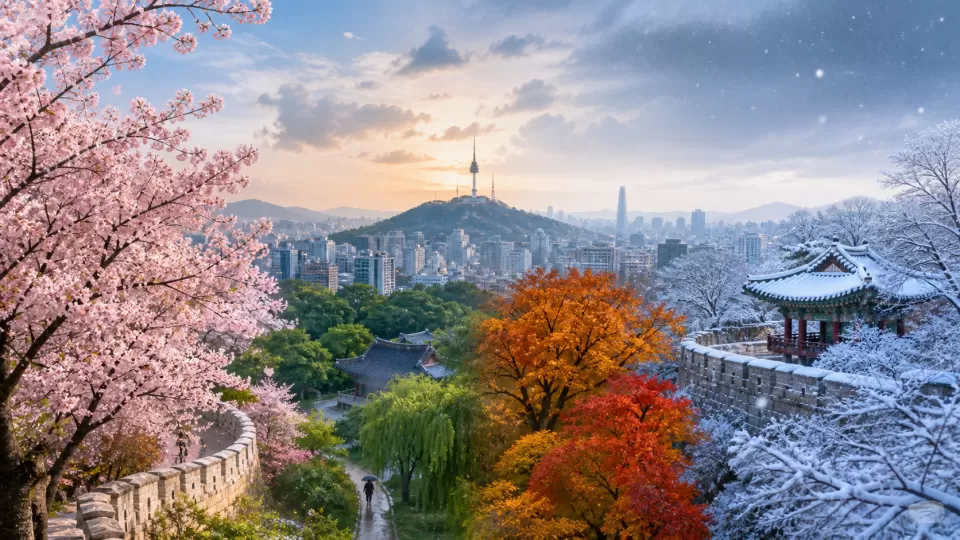
For many Indian first-time visitors, the easiest weather windows are mid-April to May and October: days are generally milder for walking than Korea's humid summer or sub-zero winter. Choose late March to April for blossoms, late October to early November for foliage, and December to February for winter experiences—but never book around an exact bloom, leaf or snowfall promise.
At a Glance
- Spring (March–May): flowers, variable chill, high blossom demand.
- Summer (June–August): hot, humid, rainy; late June to late July commonly overlaps the rainy period.
- Autumn (September–November): clearer, milder walking weather and foliage demand.
- Winter (December–February): cold and dry, with sub-zero periods and no guarantee of city snow on your dates.
Spring: March to May
Spring shifts quickly. Early March can still feel wintry to travellers arriving from warmer Indian cities. April often offers blossoms and comfortable sightseeing, while May is greener and generally warmer.
Pack layers: a light thermal or warm base for early spring, knit/fleece, wind-resistant outer layer and comfortable closed shoes. Pollen and fine-dust conditions can affect sensitive travellers; check daily alerts.
Cherry Blossoms
Timing changes every year and by latitude, elevation and weather. VisitKorea's 2026 forecast expected Seoul's first bloom around 3 April and peak around 10 April, but explicitly warned that actual dates could differ. That historical 2026 forecast is useful evidence of variability, not a promise for a future spring.
Build a trip with palaces, museums, neighbourhoods and day trips that remains worthwhile if flowers are early, late or affected by rain/wind.
Summer: June to August
Korean summer is hot and humid. Official VisitKorea guidance says the main rainy period often overlaps late June to late July, while typhoons may occur from June to October. Rain is not continuous every day, but heavy spells can disrupt flights, hikes and outdoor attractions.
Pack breathable clothing, rain protection, shoes that can dry, anti-chafe basics and sun protection. Plan indoor backups and monitor Korea Meteorological Administration alerts.
For skincare, keep layers light: gentle cleanse, moisturiser as needed and water-resistant broad-spectrum sunscreen. Humidity does not eliminate dehydration, and aggressive exfoliation plus heat can irritate skin.
Autumn: September to November
Autumn is often the strongest all-round choice. September can retain summer heat and typhoon risk; October is usually popular for comfortable city walking; November becomes colder.
Foliage progresses by region and altitude. VisitKorea's 2025 forecast placed many peak dates from late October into early November and warned that weather could shift them. Treat any annual forecast as a moving estimate.
Popular mountain and palace locations can be crowded. Reserve accommodation and intercity transport early if travelling on peak weekends.
Winter: December to February
VisitKorea describes winter averages around 0–1°C nationally, with frequent sub-zero conditions. Seoul can feel colder because of wind. Snow is possible, especially in mountain regions, but no one can guarantee snowfall in Seoul during a specific visit.
Pack a proper insulated coat, thermals, gloves, hat, warm socks and shoes with grip. Indoor heating can be strong, so removable layers help.
Cold air and heated interiors can dry skin. Simplify to a mild cleanser, richer moisturiser, lip balm and daytime sunscreen. Carry travel-size products you already tolerate.
Crowds and Relative Costs
- Cherry-blossom weeks: high demand and uncertain exact timing.
- Summer holidays: domestic travel and beach destinations can be busy; weather risk is higher.
- October foliage weekends: popular attractions and mountain transport can fill.
- Major Korean holidays: business closures and transport sell-outs can matter more than weather.
- Deep winter outside ski/holiday peaks: some city accommodation may be relatively better value, but heating-ready clothing adds cost.
“Cheapest season” is not fixed. Price your exact flight and hotel dates.
Which Season Suits You?
Choose spring if
You value flowers and cafés, accept variable temperatures and can tolerate uncertain blossom timing.
Choose summer if
You enjoy festivals, nightlife and green landscapes and can manage heat, humidity and rain.
Choose autumn if
You want the most broadly comfortable walking conditions and do not mind peak foliage crowds.
Choose winter if
You want ski resorts, cold-weather culture and crisp city days and own suitable clothing.
India-Specific Comfort Notes
Travellers from Delhi/North India may find some seasonal temperature ranges familiar but Korea's wind, humidity and indoor heating feel different. Visitors from Mumbai, Chennai, Bengaluru, Hyderabad or Kerala should not underestimate early spring and winter cold. Weather-sensitive travellers should prioritise late April–May or early/mid-October and still check the ten-day forecast.
FAQs
What is the single best month?
October is a strong general choice for walking weather, but the best month depends on crowds, interests and live prices.
When do cherry blossoms bloom in Seoul?
Often around early April, but annual timing changes. Wait for that year's forecast and expect uncertainty.
When is autumn foliage in Seoul?
Often late October into early November, but weather shifts the schedule.
Does it snow in Seoul in December?
It can, but snow on a particular date is not guaranteed. Mountain destinations are more reliable for winter activities.
Is July a bad time?
Not automatically, but expect heat, humidity and possible heavy rain. Keep flexible indoor plans.
What season is best for skincare shopping?
Any season; choose for travel comfort. Protect temperature-sensitive purchases and avoid opening tax-refund goods before departure if verification may be required.
Trusted Sources
- VisitKorea climate guide: https://english.visitkorea.or.kr/svc/contents/infoBscView.do?vcontsId=140636
- 2026 cherry blossom forecast and weather caveat: https://english.visitkorea.or.kr/svc/contents/contentsView.do?menuSn=177&vcontsId=1570512
- 2025 foliage forecast and weather caveat: https://english.visitkorea.or.kr/svc/contents/contentsView.do?vcontsId=231292
- Korea Meteorological Administration: https://www.weather.go.kr/w/index.do
- VisitKorea portal: https://english.visitkorea.or.kr/
Plan next: https://kbeautyindia.in/guides/first-trip-south-korea-from-india
Last reviewed: 27 August 2026. Seasonal descriptions are planning guidance, not a forecast for your dates.