

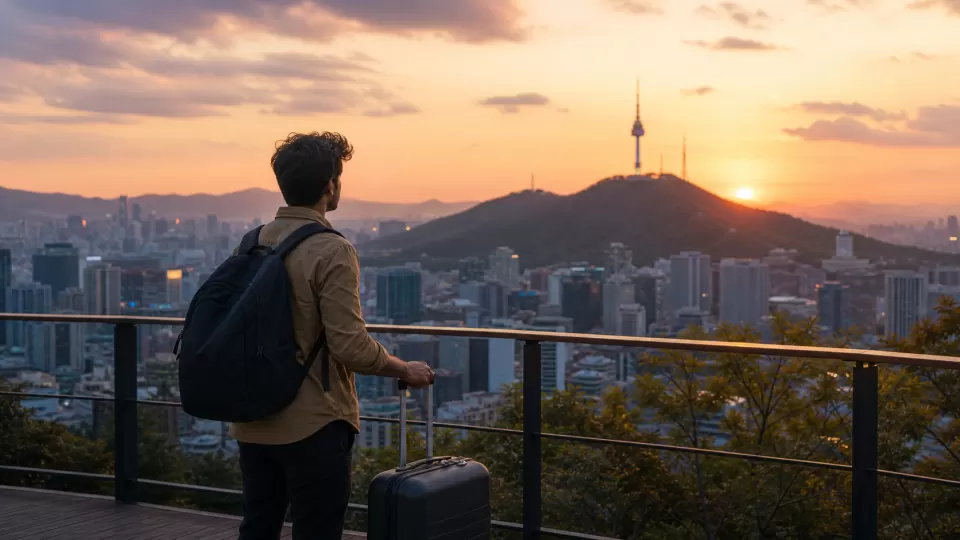
For a first trip from India to South Korea, complete the visa process before committing to inflexible bookings, fly into Incheon for most Seoul itineraries, arrange data access, carry at least one internationally enabled card plus some Korean won, and learn how Tmoney and Seoul's subway work. Seven days is enough for Seoul plus one day trip or a brief second-city experience, but not for seeing the whole country.
At a Glance
- Visa: Indian ordinary-passport holders normally require one in advance.
- Main gateway: Incheon International Airport (ICN); Gimpo (GMP) mainly handles domestic and selected regional routes.
- Connectivity: roaming, physical SIM, eSIM and Wi-Fi rental are available; confirm device compatibility before buying.
- Electricity: 220 V, 60 Hz, two round-pin outlets.
- Emergency numbers: 112 police; 119 fire/ambulance; 1330 Korea Travel Hotline for tourism help and interpretation.
- Best first bases: Myeongdong/Jung-gu, Hongdae, Jongno/Insadong or Gangnam, depending on itinerary.
1. Start With the Visa
Read the current Indian tourist-visa guide at https://kbeautyindia.in/guides/south-korea-tourist-visa-for-indians and use the official Korea Visa Portal, https://www.visa.go.kr/. Keep your itinerary consistent with the application and avoid non-refundable bookings until a decision.
2. Flights From India
Delhi and Mumbai are the most useful gateways for comparing direct and one-stop routes; travellers from Bengaluru, Chennai, Hyderabad, Kolkata and other cities may connect domestically or through Asian hubs. Schedules and fares change by date. Search by total journey time, baggage included, connection requirements and arrival terminal—not headline fare alone.
As a live market reference checked on 27 August 2026, Cathay Pacific displayed some Mumbai–Seoul round trips from about INR 48,463 for selected September/October dates. This is not a general fare promise. Compare your exact dates directly with airlines and reputable booking systems.
3. Incheon Airport to Seoul
Official Seoul guidance lists Airport Railroad, airport limousine bus and taxi. AREX is useful for Seoul Station/Hongdae connections; buses can be easier with luggage when they stop near your hotel. Taxis offer door-to-door convenience but cost more. Check terminal, operating hours and last departure on arrival day: https://english.seoul.go.kr/service/entry/getting-to-seoul-from-incheon-airport/
4. SIM, eSIM and Internet
Korea has extensive public Wi-Fi, but a working mobile connection is valuable for maps, translation, bookings and emergencies. VisitKorea says roaming counters at major airports sell SIMs and rent Wi-Fi devices; prepaid eSIM can be delivered electronically. Check whether your phone is unlocked and supports the required bands/eSIM before purchase.
Do not depend entirely on airport or café Wi-Fi. Download hotel details and key maps offline.
5. Money, Cards and Cash
Cards are widely accepted, including for small purchases, but keep some KRW for markets, older machines, small vendors, card top-ups or outages. Enable international transactions, tell your bank, and carry a second card on a different network. When a terminal offers currency conversion, paying in KRW usually makes the exchange rate easier to evaluate against your issuer's rate.
Exchange rates fluctuate daily. Set a budget in both INR and KRW and add a contingency instead of relying on an old conversion screenshot.
6. Transport Cards and Apps
Tmoney is a rechargeable card used on subways and buses and can also work in some taxis and convenience stores. Tap when entering and exiting. Seoul also offers short-term Climate Card passes, but service boundaries matter; the tourist pass continues even as the resident monthly programme changes in 2026.
Useful tools include VisitKorea, an English-capable Korean map/navigation app, a translation app and the official airport/rail apps for routes you will use. Download them before departure and save addresses in Korean.
7. Where to Stay
- Myeongdong/Jung-gu: central shopping, airport-bus convenience and easy access to palaces and Namsan.
- Hongdae: nightlife, cafés, youthful retail and direct all-stop AREX access.
- Jongno/Insadong: heritage atmosphere near palaces, Bukchon and traditional streets.
- Gangnam: modern business districts, premium retail, clinics and southern Seoul activities; less convenient for a palace-heavy first itinerary.
Choose within a short walk of a subway station. A cheaper room far from your route can cost time and transfers.
8. Food and Vegetarian Planning
Korean menus can hide fish sauce, anchovy broth, meat stock, egg or seafood even when the visible ingredients look vegetarian. VisitKorea recommends giving detailed exclusions rather than only saying “vegetarian.” Temple food is a useful option; bibimbap and gimbap often need meat/egg removed and broth checked.
Save: 저는 채식주의자예요 (jeoneun chaesikjuuijayeyo), “I am vegetarian,” and 고기 빼 주세요 (gogi ppae juseyo), “Please leave out meat.” Strict vegans should also specify fish/seafood, egg, dairy and broth.
9. Etiquette and Safety
Keep voices low on public transport, queue, offer and receive important items with two hands, and remove shoes where indicated. Do not eat in prohibited areas. Follow photography restrictions at palaces, museums, shops and military/transport locations.
South Korea is easy to navigate, but use ordinary city precautions: protect valuables, avoid unlicensed services, keep your accommodation address, and monitor weather/emergency alerts. Call 112 for police and 119 for fire or ambulance.
10. Weather and Skincare
Spring and autumn are generally mild; summer is hot, humid and overlaps with the rainy/typhoon period; winter is cold and dry. Check the Korea Meteorological Administration forecast immediately before packing.
For humid weather, use lighter layers and a water-resistant sunscreen. In cold dry weather, bring a gentler cleanser, moisturiser and lip care. Do not start several unfamiliar actives while travelling.
11. Shopping and Tax Refund Basics
Shop through established retailers or brand-operated channels, compare the same product size and formulation, and keep receipts. Tax-refund eligibility is tied to designated stores and conditions. Current VisitKorea guidance states eligible goods generally require a receipt of at least KRW 15,000, must leave Korea within three months and should remain unused for customs verification. Carry your passport when shopping if you want an immediate refund.
Read https://kbeautyindia.in/guides/korean-skincare-shopping-seoul-guide for the detailed beauty-shopping checklist.
Suggested 7-Day Structure
- Day 1: arrive, check in, neighbourhood walk and early night.
- Day 2: Gyeongbokgung, Bukchon surroundings, Insadong and Cheonggyecheon.
- Day 3: Myeongdong, Namsan area and a structured K-beauty shopping session.
- Day 4: Hongdae/Yeonnam or Seongsu, depending on interests.
- Day 5: day trip such as Suwon or a carefully booked DMZ tour; verify operating conditions.
- Day 6: Gangnam, COEX area, museums or a beauty/wellness appointment from a verified provider.
- Day 7: market/souvenirs, tax-refund preparation and airport transfer with buffer time.
Korean Phrases to Learn
- 안�
�하세요 — annyeonghaseyo — hello.
- 감사합니다 — gamsahamnida — thank you.
- 실례합니다 — sillyehamnida — excuse me.
- 얼마예요? — eolmayeyo? — how much is it?
- 화장실이 어디예요? — hwajangsiri eodiyeyo? — where is the bathroom?
- 도와주세요 — dowajuseyo — please help me.
More: https://kbeautyindia.in/guides/korean-language-101-indian-travellers
FAQs
How much time should I allow at Incheon Airport?
Follow your airline's check-in guidance and add time for the long airport transfer, tax-refund/customs steps and terminal changes.
Will an Indian card work everywhere?
Most tourist-facing merchants accept cards, but issuer blocks, offline terminals and small vendors occur. Carry backup payment and some KRW.
Is Seoul enough for seven days?
Yes for a relaxed first trip with one day trip. Add Busan or Jeju only if you accept more transit and fewer Seoul days.
Can vegetarians manage in Korea?
Yes with planning, but confirm broth, fish sauce, egg and seafood explicitly.
Should I buy a SIM at the airport?
It is convenient, but compare official carrier/prepaid options and device compatibility before arrival.
Which season is easiest for Indian travellers?
Many find April–May and October comfortable, but crowds, allergies and variable bloom/foliage timing matter.
Trusted Sources
- VisitKorea travel portal: https://english.visitkorea.or.kr/
- Electricity and communications: https://english.visitkorea.or.kr/svc/contents/infoHtmlView.do?vcontsId=140041
- Seoul airport transfer guide: https://english.seoul.go.kr/service/entry/getting-to-seoul-from-incheon-airport/
- Seoul public transport: https://english.seoul.go.kr/service/movement/public-transportation/
- VisitKorea transportation cards: https://english.visitkorea.or.kr/svc/contents/contentsView.do?vcontsId=140663
- Vegetarian guidance: https://english.visitkorea.or.kr/svc/contents/contentsView.do?vcontsId=140732
- Emergency guidance: https://english.visitkorea.or.kr/svc/faq/faqMainView.do?menuSn=404&pstSn=94
- Tax refunds: https://english.visitkorea.or.kr/svc/contents/infoBscView.do?vcontsId=140736
Last reviewed: 27 August 2026. Recheck visa, airline, transit, weather and tax-refund details before travel.