

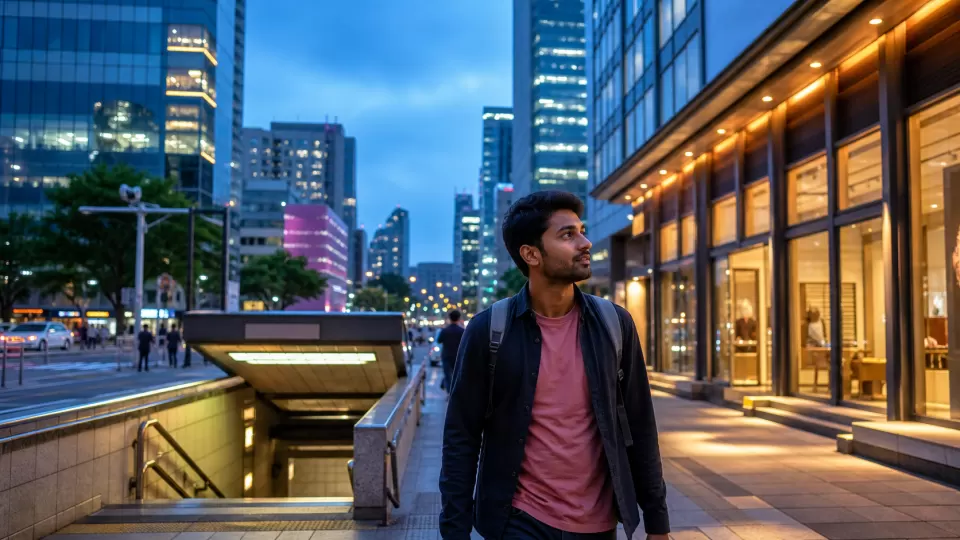
Seoul is easiest for a first-time Indian traveller when you stay near a subway station, group each day's sights by area, use a rechargeable Tmoney card or a suitable short-term pass, and keep your hotel address saved in Korean. Myeongdong is the most convenient all-round base; Hongdae suits nightlife and airport-rail access; Jongno/Insadong suits heritage; Gangnam suits modern southern Seoul.
At a Glance
- Main international airport: Incheon (ICN).
- Airport choices: AREX, limousine bus or taxi; choose by hotel location and luggage.
- Local transport: subway and buses cover most visitor needs.
- Payment: cards are widely accepted, but keep some KRW and a backup card.
- First-trip stay: Myeongdong/Jung-gu or Jongno for central sightseeing; Hongdae for evening energy.
- Emergency: 112 police, 119 fire/ambulance, 1330 travel help.
Best Areas to Stay
Myeongdong and Jung-gu
Best for a compact first visit, beauty shopping and access to Namsan, Namdaemun, Euljiro and palace districts. It is busy and tourist-oriented, so compare room size and street noise.
Hongdae and Yeonnam
Best for cafés, music, nightlife and a younger atmosphere. The all-stop airport railroad serves Hongik University Station, which helps with Incheon transfers. Weekend streets can be noisy.
Jongno and Insadong
Best for Gyeongbokgung, Changdeokgung, Bukchon surroundings, traditional shopping and walkable history. Check the exact subway line because “Jongno” covers a large area.
Gangnam
Best for COEX, modern retail, clinics, business travel and southern Seoul. It is less efficient if most of your list is north of the river.
Getting From Incheon Airport
Seoul's official guide lists Airport Railroad, limousine bus and taxi. AREX offers express and all-stop services; the best choice depends on whether your hotel connects easily from Seoul Station or Hongdae. Airport buses can reduce transfers with luggage. Taxis make sense for groups, late arrival or inaccessible hotels, but verify the official stand and fare conditions.
Check current routes and operating hours on arrival day: https://english.seoul.go.kr/service/entry/getting-to-seoul-from-incheon-airport/
Subway, Bus and Taxi
Seoul's subway has English signage and numbered exits. Route by station exit, not station name alone; a wrong exit can add a long walk. On buses, board at the front and leave at the rear where indicated, and tap your transport card when entering and exiting.
Use licensed taxis from official ranks or a reputable app. Save the destination in Korean and confirm that the driver has started the meter or agreed lawful fare method.
Tmoney or Climate Card?
Tmoney is flexible for pay-as-you-go subway/bus travel and works beyond the Seoul-only limits of some passes. The Climate Card offers 1-, 2-, 3-, 5- and 7-day tourist options, but excludes certain lines and services. As of 27 August 2026, Seoul states that the tourist short-term passes continue while changes affect the resident monthly programme.
For a three-day itinerary with several rides each day, compare the pass cost with likely pay-as-you-go fares and airport exclusions. Current details: https://english.seoul.go.kr/policy/transportation/climate-card/
Payment and Connectivity
Most shops, restaurants and attractions accept cards. Carry KRW for small vendors, markets and contingencies. Enable international use and keep a second card separate.
Get an eSIM/SIM or roaming plan for maps and translation. Free Wi-Fi is common but not reliable enough for every street decision.
Major First-Time Attractions
- Gyeongbokgung and the National Palace Museum area.
- Changdeokgung and Jongmyo, subject to current hours and tour rules.
- Bukchon surroundings, with respect for residents and noise restrictions.
- Insadong and Ikseon-dong.
- Cheonggyecheon and central Seoul.
- Namsan/Seoul Tower area; verify transport and ticket details.
- Hongdae/Yeonnam or Seongsu for contemporary neighbourhood culture.
- COEX area and Gangnam for southern Seoul.
- Traditional markets such as Gwangjang or Namdaemun, while checking dietary ingredients.
Attraction prices and closed days change. Use each attraction's official website instead of an old itinerary screenshot.
Korean Beauty Shopping
Myeongdong offers dense multi-brand and chain shopping; Hongdae combines trend-led retail with nightlife; Gangnam/Apgujeong and department stores suit premium brands and consultations. Olive Young is a major multi-brand retailer, but stock and promotions vary by branch.
Make a list by skin need and product size. Compare with actual Indian availability at https://kbeautyindia.in/products and read https://kbeautyindia.in/guides/korean-skincare-shopping-seoul-guide before buying.
Vegetarian Considerations
“Vegetable” does not necessarily mean vegetarian: broth, fish sauce, seafood, egg and meat garnishes are common. Save a detailed Korean dietary note and use dedicated vegan/vegetarian or temple-food restaurants when strict separation matters. Indian restaurants are available but can cluster in specific districts and cost more than local meals.
Cultural Etiquette
- Queue and keep phone/audio volume low on public transport.
- Give priority seats to those entitled to them.
- Receive or offer important items with two hands.
- Remove shoes where instructed.
- Respect residential quiet zones around Bukchon.
- Ask before photographing people, interiors or commercial displays.
A Practical 3-Day Seoul Itinerary
Day 1: Palaces and old Seoul
Gyeongbokgung area, a museum, Insadong and Cheonggyecheon. Avoid stacking every palace; choose depth over transit.
Day 2: Myeongdong and central Seoul
Namdaemun or a central market, Myeongdong shopping, Namsan area and Euljiro/central dinner. Keep tax-refund receipts together.
Day 3: Contemporary Seoul
Choose Hongdae/Yeonnam plus the Han River, or Seongsu plus Gangnam/COEX. Crossing the river repeatedly wastes time.
FAQs
Is Myeongdong too touristy?
It is touristy, but its central location and shopping density make it practical for a first visit.
Can I use an international card on the subway?
Seoul expanded international-card acceptance at many vending machines in March 2026, but a transport card remains convenient and not every machine/payment scenario is identical.
Is the Climate Card valid from Incheon Airport?
Coverage is limited and direction-specific in places; do not assume it covers your airport journey. Check the official service map.
Are Seoul taxis safe?
Licensed taxis are a normal option. Use official stands/apps, save the Korean address and avoid unsolicited rides.
Where should vegetarians stay?
Choose by transport first, then map several suitable restaurants around the hotel and each day's route.
How many days does Seoul need?
Three days covers highlights; five to six days gives a more relaxed mix of history, neighbourhoods, shopping and a day trip.
Trusted Sources
- Seoul airport transfer guide: https://english.seoul.go.kr/service/entry/getting-to-seoul-from-incheon-airport/
- Seoul public transportation: https://english.seoul.go.kr/service/movement/public-transportation/
- Seoul Climate Card: https://english.seoul.go.kr/policy/transportation/climate-card/
- Seoul 2026 guidebook: https://english.seoul.go.kr/wp-content/uploads/2026/03/seoulguidebook_eng.pdf
- VisitKorea transportation cards: https://english.visitkorea.or.kr/svc/contents/contentsView.do?vcontsId=140663
- VisitKorea vegetarian tips: https://english.visitkorea.or.kr/svc/contents/contentsView.do?vcontsId=140732
- Visit Seoul: https://english.visitseoul.net/
Last reviewed: 27 August 2026. Verify attraction, route, fare and opening information immediately before visiting.