

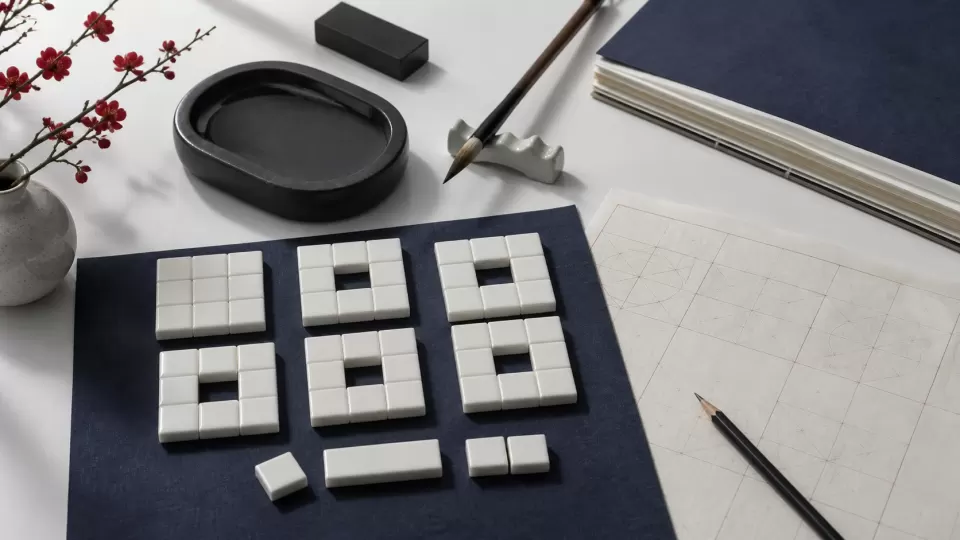
In one focused hour, a beginner can understand how Hangul letters combine into left-to-right syllable blocks and can sound out simple signs. That is not fluency: pronunciation rules, vocabulary, grammar and listening require sustained study. The goal is to stop seeing Korean as drawings and start recognising an organised writing system.
At a Glance
- Hangul is alphabetic: letters represent consonant and vowel sounds.
- Letters are packed into syllable blocks such as 한, not written as a loose line.
- Text runs left to right, with blocks ordered in normal lines.
- Each block needs a vowel and normally begins with a consonant position; �
� is silent at the start of a vowel-initial syllable.
A One-Hour Plan
- Minutes 0–15: basic vowels.
- Minutes 15–30: basic consonants.
- Minutes 30–45: build syllable blocks.
- Minutes 45–60: read signs and verify with audio.
Basic Vowels
- �
� a, as in 가 ga.
- �
� eo, a Korean vowel not captured exactly by English spelling.
- �
� o.
- �
� u.
- �
� eu, another Korean vowel that needs audio practice.
- �
� i.
- �
� ae and �
� e; many modern speakers pronounce these similarly.
Y-vowels add a stroke: �
� ya, �
� yeo, �
� yo, �
� yu.
Compound vowels include �
� wa, �
� wo, �
� oe, �
� wi and �
� ui. Learn them after the six core shapes.
Basic Consonants
- ㄱ g/k.
- ㄴ n.
- ㄷ d/t.
- ㄹ r/l depending on position.
- �
� m.
- �
� b/p.
- �
s.
- �
� silent initially, ng finally.
- �
� j.
- �
� ch.
- �
� k.
- �
� t.
- �
� p.
- �
� h.
Tense consonants—ㄲ, ㄸ, �
�, �
�, �
�—are not simply “double volume.” They contrast with plain and aspirated consonants and require listening practice.
How Syllable Blocks Work
A block is built around its vowel.
Vertical vowels
With �
�, �
�, �
� and similar vertical shapes, the initial consonant sits left: ㄱ + �
� = 가 (ga); ㄴ + �
� = 너 (neo).
Horizontal vowels
With �
�, �
�, �
� and similar horizontal shapes, the initial consonant sits above: ㄱ + �
� = 고 (go); �
� + �
� = 무 (mu).
Final consonants
A consonant can sit below as 받침 (batchim): 한 = �
� + �
� + ㄴ; 국 = ㄱ + �
� + ㄱ. Final consonants often sound different from their initial values and interact with the next syllable.
Reading Direction
Modern Korean is normally read left to right. Read each square block as one syllable, then move to the next block: 한-국 (Han-guk), 서-울 (Seo-ul).
Do not read every visual component from the page's far left independently. Finish the internal order of the block first: initial consonant, vowel, then final consonant.
Simple Example Words
- 한국 — Hanguk — Korea.
- 서울 — Seoul — Seoul.
- 지하철 — jihacheol — subway.
- 화장실 — hwajangsil — bathroom.
- �
구 — ipgu — entrance.
- 출구 — chulgu — exit.
- 약국 — yakguk — pharmacy.
- 병원 — byeongwon — hospital.
- 카드 — kadeu — card.
- 물 — mul — water.
Compare your reading with audio from the National Institute of Korean Language's learner dictionary rather than trusting English spelling alone.
Useful Signs
- �
구: entrance.
- 출구: exit.
- 남자: men/male.
- 여자: women/female.
- 금연: no smoking.
- 공항: airport.
- 역: station.
- 버스: bus.
- 택시: taxi.
- 면세: duty-free/tax-exempt context.
Why Romanization Looks Inconsistent
Official Revised Romanization follows pronunciation rules, not a one-letter mechanical substitution in every context. ㄱ can appear as g or k; ㄹ can appear as r or l. Connected speech also changes sounds. Use romanization as scaffolding, then move toward Hangul plus audio.
Common Beginner Mistakes
- Calling �
� “eo” as two separate English vowels.
- Treating �
� “eu” as two sounds.
- Forgetting that initial �
� is silent but final �
� is ng.
- Reading ㄹ as always r or always l.
- Ignoring final consonants.
- Assuming spelling predicts every spoken sound without liaison/assimilation.
- Believing one hour is enough to understand Korean sentences.
Next Practice
Copy five station names from your Seoul route and divide them into blocks. Then read the essential phrases at https://kbeautyindia.in/guides/korean-language-101-indian-travellers and listen to each expression.
FAQs
Can I really learn Hangul in one hour?
You can understand the basic system and begin sounding out words. Automatic reading and accurate pronunciation take practice.
Is Hangul the Korean language?
Hangul is the writing system. Korean is the language, including vocabulary, grammar and speech levels.
Why is �
� sometimes silent?
It fills the initial consonant position before a vowel. In final position it represents ng.
Do Koreans write vertically?
Vertical writing exists historically and stylistically, but everyday modern text is predominantly horizontal left-to-right.
Should I memorise every compound vowel first?
No. Master core vowels, consonants and block structure, then expand.
Which romanization system is used here?
The Republic of Korea's Revised Romanization, adjusted only where a familiar established spelling such as Seoul is standard.
Trusted Sources
- National Institute of Korean Language, About Hangul: https://www.korean.go.kr/eng_hangeul/principle/001.html
- Official Romanization of Korean: https://www.korean.go.kr/front_eng/roman/roman_01.do
- Revised Romanization publication: https://www.korean.go.kr/front/bookData/bookDataView.do?book_category_id2=19&book_seq=51&mn_id=104
- Korean-English Learners' Dictionary: https://krdict.korean.go.kr/eng/mainAction?flag=PC&nation=eng
- King Sejong Institute Foundation: https://www.iksi.or.kr/
Last reviewed: 27 August 2026.