

Key Takeaways
- Double cleansing means using an oil-based cleanser or makeup remover first, then a water-based cleanser.
- It can help remove water-resistant sunscreen, long-wear makeup and heavy facial products, but most people do not need it every night.
- One careful wash with a gentle cleanser is often enough, especially if you wear little makeup and a non-water-resistant sunscreen.
- More cleansing is not automatically cleaner. Tightness, stinging, redness and flaking are signs to reduce intensity or frequency.
- Choose products by how they rinse and how your skin responds, not by the idea that oils “pull toxins” from pores.
What double cleansing actually is
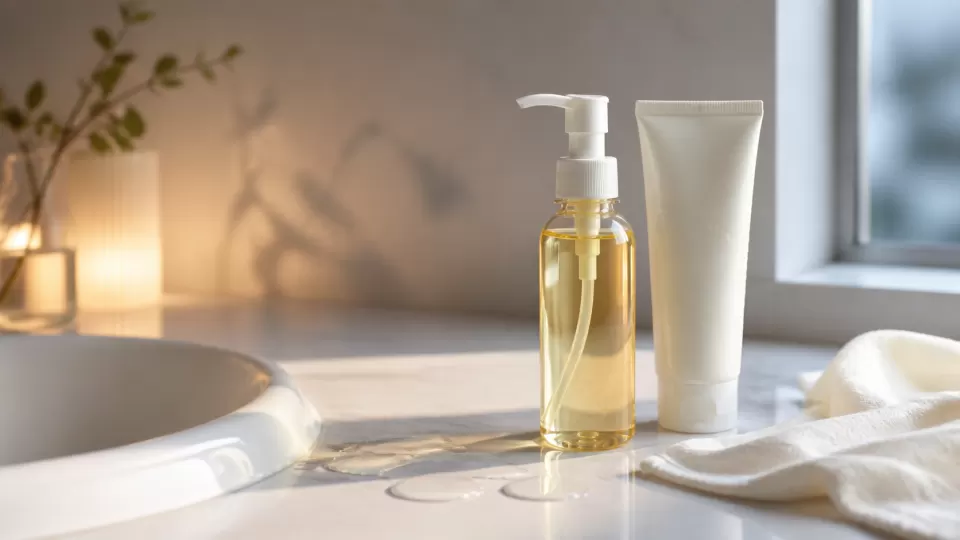
Double cleansing is a two-step evening method. First, an oil cleanser, cleansing balm or micellar makeup remover loosens oil-soluble residue such as makeup, sebum and some water-resistant sunscreen films. Second, a water-based cleanser removes remaining residue, sweat and dirt.
The method became closely associated with Korean and Japanese beauty routines, but the principle is ordinary cosmetic chemistry: substances with similar properties can dissolve one another, and surfactants then help the mixture rinse away. It is not a detox, deep-pore vacuum or requirement for healthy skin.
Dermatologist guidance from Cleveland Clinic notes that double cleansing may be useful for waterproof makeup and sunscreen, while also warning that most skin types do not need it. Over-washing can contribute to dryness, irritation and barrier disruption.
When double cleansing may help
You wear long-wear or waterproof makeup
Foundation, transfer-resistant lip products, mascara and silicone-rich primers may not come off completely with a quick wash. A dedicated first cleanser lets you dissolve them with less rubbing. This can be especially helpful around the hairline and jaw, where makeup is often missed.
For eye makeup, use a remover designed for the eye area and avoid forceful rubbing. Persistent eye redness, swelling or pain needs medical attention.
You use a water-resistant sunscreen
Water-resistant sunscreens are designed to form a durable film. After a humid commute, sport or coastal day, an emulsifying oil cleanser can make removal easier. “Water resistant” does not mean a sunscreen must be scrubbed off; a well-chosen remover should loosen it gently.
Your single cleanser leaves obvious residue
If cotton used after washing still picks up substantial makeup, or you can feel a stubborn waxy film, a separate removal step may be useful. Before adding a second full cleanse, consider whether your existing cleanser is simply mismatched to what you wear.
You prefer a low-rub method
A fluid oil or balm can reduce the friction needed to remove makeup. The benefit comes from effective dissolution and rinsing, not from massaging for ten minutes. Longer massage can irritate and does not reliably extract plugs from pores.
When it may be too much
You wear no makeup and light sunscreen
If one gentle cleanse leaves your face comfortable and clean, a second cleanser adds little. Skin does not need to feel bare or squeaky at bedtime.
Your skin is dry, eczematous or barrier-impaired
Every cleansing step removes some material from the skin surface. Harsh surfactants, hot water and long contact time can increase the problem. People with eczema or active dermatitis should follow medical advice and use minimal, fragrance-free cleansing.
You are already using drying acne treatment
Benzoyl peroxide, retinoids and exfoliating acids can make skin more reactive. If you also double cleanse nightly, the combined routine may cause tightness and peeling. Simplify first; do not interpret irritation as acne “purging.”
Your face stings after washing
Stinging, persistent redness, flaking, tenderness and a shiny-tight surface are reasons to stop and reassess. Use lukewarm water, shorten cleansing time and return to one mild cleanser. Seek medical advice for swelling, blistering, oozing or a persistent rash.
How to double cleanse gently
Step 1: Use a first cleanser on dry skin
With dry hands, spread a small amount of cleansing oil or balm over dry skin. Focus on makeup and sunscreen rather than massaging aggressively. Around 30 to 60 seconds is enough for most routines.
Add a little lukewarm water so an emulsifying oil turns milky, then rinse. If using micellar water, saturate a soft pad and press briefly before wiping with minimal friction. Some micellar products are designed to be rinsed; follow the label.
Step 2: Follow with a mild water-based cleanser
Use a small amount, spread with fingertips and rinse thoroughly. Foaming is not proof of cleaning power. A low-foam cream or gel can cleanse effectively.
Pat with a soft towel. Do not use a scrub, cleansing brush or textured cloth as an automatic third step.
Step 3: Moisturise promptly
Apply a moisturiser suitable for your skin while it is slightly damp. A gel may suit oily skin in humid weather; a lotion or cream can be more comfortable for dry skin. Ceramides, glycerin and other humectants or emollients can support hydration, but formula tolerability matters more than one fashionable ingredient.
Choosing the first cleanser
Cleansing oil
Look for an oil that emulsifies readily and rinses without an obvious film. The ingredient list may include plant oils, mineral oil, esters and surfactants. “Natural” is not necessarily gentler, and essential oils can irritate sensitive skin.
Acne-prone skin can use a cleansing oil, but it is not mandatory. If one formula repeatedly leaves congestion or itching, discontinue it rather than assuming your skin is “adjusting.”
Cleansing balm
Balms are solid or semi-solid oils that melt on contact. They travel well and can remove heavy makeup. Use a clean spatula or clean dry fingers to reduce contamination. Fragrant balms may not suit reactive skin.
Micellar water
Micelles are surfactant structures dispersed in water that can lift makeup and oil. Micellar water is a practical alternative for people who dislike oils. Avoid repeated hard wiping; use enough liquid and a soft pad.
Plain oil from the kitchen
Cooking oils are not designed as facial cleansers and may not emulsify or rinse cleanly. A cosmetic cleansing oil is formulated with surfactants for predictable removal. Coconut oil in particular can feel occlusive and may worsen breakouts for some users.
Choosing the second cleanser
Select a gentle cleanser that does not leave persistent tightness. For oily skin, a light gel or modestly foaming cleanser can feel pleasant. For dry or sensitive skin, a cream or lotion cleanser may be better. Fragrance-free is a useful option when fragrance is a known trigger.
Do not rely heavily on pH marketing alone. Skin-compatible pH can support mildness, but surfactant type, concentration, fragrance and contact time also influence tolerability.
Double cleansing in Indian conditions
Humidity, sweat, particulate pollution and sunscreen use vary widely across India. Sweat is water-soluble and does not require an oil cleanser by itself. After a sweaty workout, a single gentle cleanse is commonly sufficient. If the same day also involved water-resistant sunscreen and makeup, two steps may be more practical.
During dry winters, in air-conditioned environments or while using acne medicine, reduce cleansing intensity. In a humid monsoon, resist the urge to wash every time the face feels sticky; blotting and one post-sweat cleanse can be kinder.
Water quality can also affect the experience of washing. If your skin feels persistently dry despite a mild routine, consider shorter rinsing, prompt moisturising and professional evaluation rather than endlessly switching cleansers.
Common myths
“Oil cleansing removes sebaceous filaments permanently”
Sebaceous filaments are normal structures that help move sebum to the surface. They can look temporarily less visible after cleansing, but massage does not permanently remove them. Forceful extraction can injure skin.
“Oily skin must avoid all oils”
Oiliness describes sebum production, not a universal reaction to every oil-containing formula. An emulsifying cleanser is rinsed off. Evaluate the finished product and your response.
“Double cleansing prevents acne”
Removing makeup and sunscreen may reduce residue, but acne has multiple causes. Over-cleansing can worsen irritation. Proven acne treatments and medical care are more important for persistent disease.
“You must double cleanse every night”
Use it when the day’s products justify it. Routine flexibility is sensible skincare, not inconsistency.
FAQ
Can I use the same cleanser twice?
That is technically two washes, but it is not the classic oil-then-water method. Repeating a strong cleanser may increase dryness. If one wash is ineffective, choose a suitable remover rather than automatically washing twice.
Should I double cleanse in the morning?
Usually no. There is no makeup or day-long sunscreen film to remove. A water rinse or one mild cleanse is generally enough.
Does micellar water need to be rinsed?
Follow the product directions. People with sensitive skin may prefer to rinse so surfactant residue does not remain, especially when a second cleanser follows.
Can double cleansing cause breakouts?
Yes, if a product irritates, leaves residue or encourages excessive rubbing. Breakouts can also be unrelated. Introduce one cleanser at a time and stop if a repeatable problem develops.
How long should each step take?
Brief, gentle cleansing is adequate: roughly 30 to 60 seconds per step. Longer is not proven to clean pores more deeply.
What should I do if my skin feels tight afterward?
Stop double cleansing for a few days, use one mild cleanser and moisturise. If tightness, rash or burning persists, consult a dermatologist.
Sources
- Cleveland Clinic, Double Cleansing Method Explained: https://health.clevelandclinic.org/double-cleansing-explained
- American Academy of Dermatology, face-washing guidance for acne: https://www.aad.org/public/diseases/acne/skin-care/tips
- American Academy of Dermatology, oily-skin care: https://www.aad.org/public/everyday-care/skin-care-basics/dry/oily-skin
- NCBI Bookshelf, Moisturizers: https://www.ncbi.nlm.nih.gov/books/NBK545171/